
The Colorado heat pump market is like the Wild West—fast-moving, full of promise, and crowded with players. Utilities, cities, counties, states, and federal programs are each launching interventions, which together hold the potential to create market effects that are greater than the sum of their parts.
Viewing this as an opportunity to sidestep the confusion that could arise from a haphazard approach, Xcel Energy initiated a holistic market transformation evaluation approach to accelerate feedback and promote durable impacts from its beneficial electrification programs.
The horizon: Go beyond short-term program metrics and ride toward long-term, system-level change.

Taming the Incentive Terrain
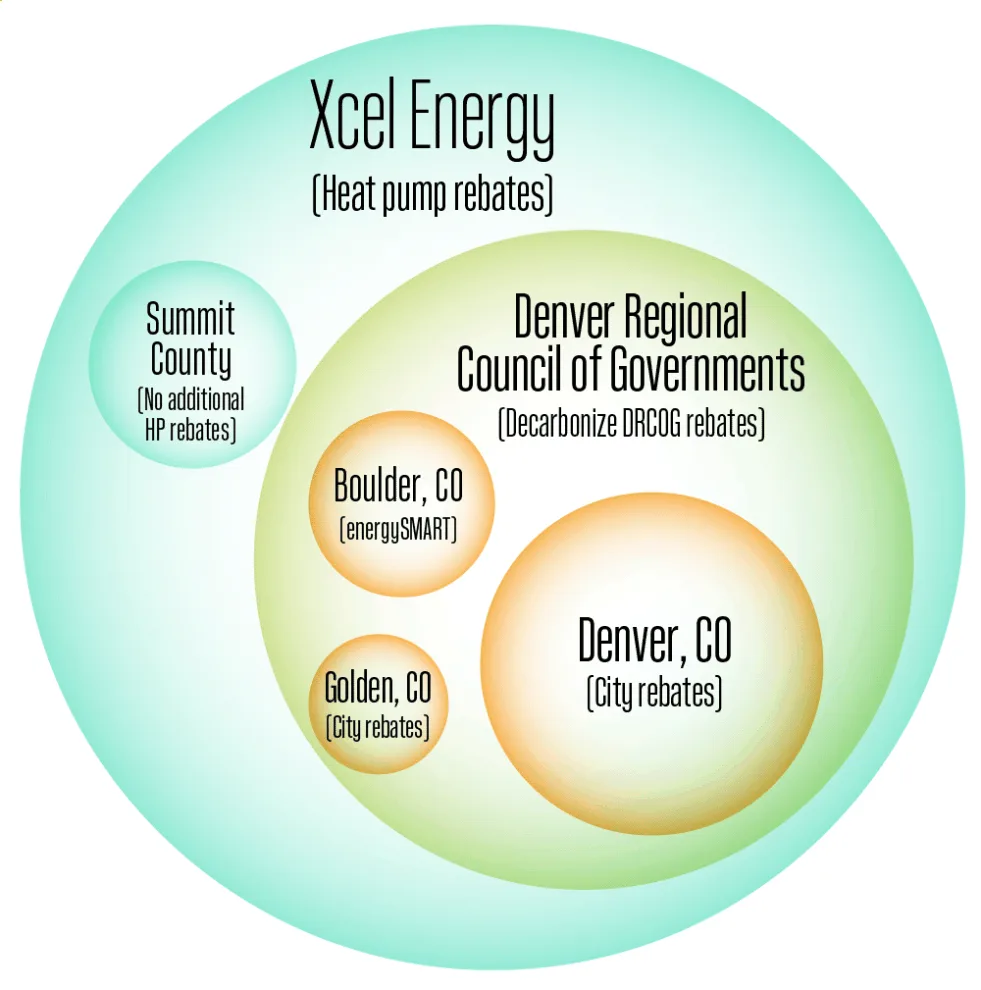
The availability of financial incentives for heat pump purchasers is dependent on the city and county in which they live, and the utilities which provide them service.
The varied availability of incentives allows for a quasi-experimental comparison to understand the influence of incentive stacking (combining incentives to increase uptake) on HP adoption.
Logic on the Range
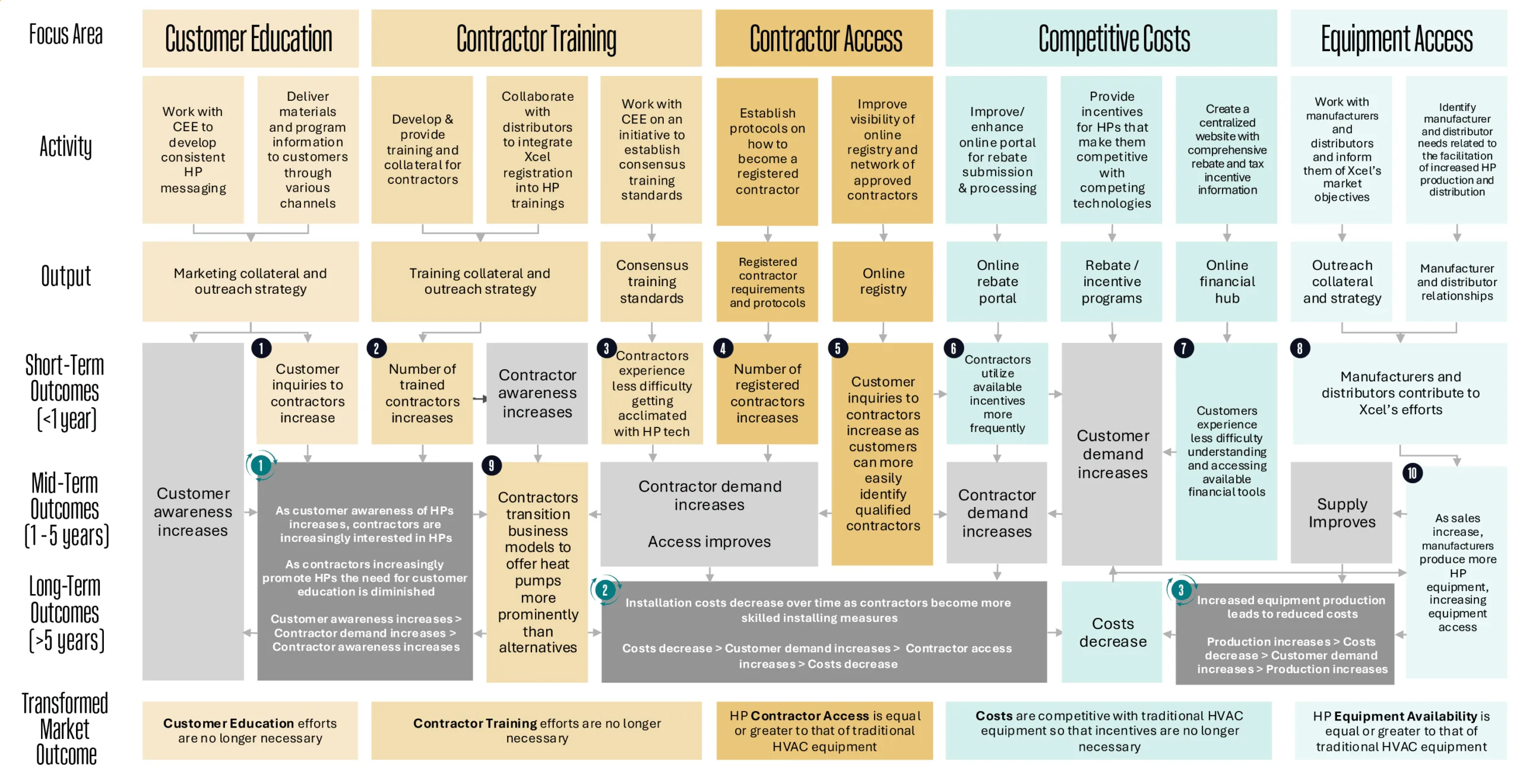
Xcel’s Program Theory and Logic Model (PTLM) shows how interventions drive market change across awareness, demand, and availability, and pinpoints the Market Progress Indicators (MPIs) that track success.
Mapping the Frontier
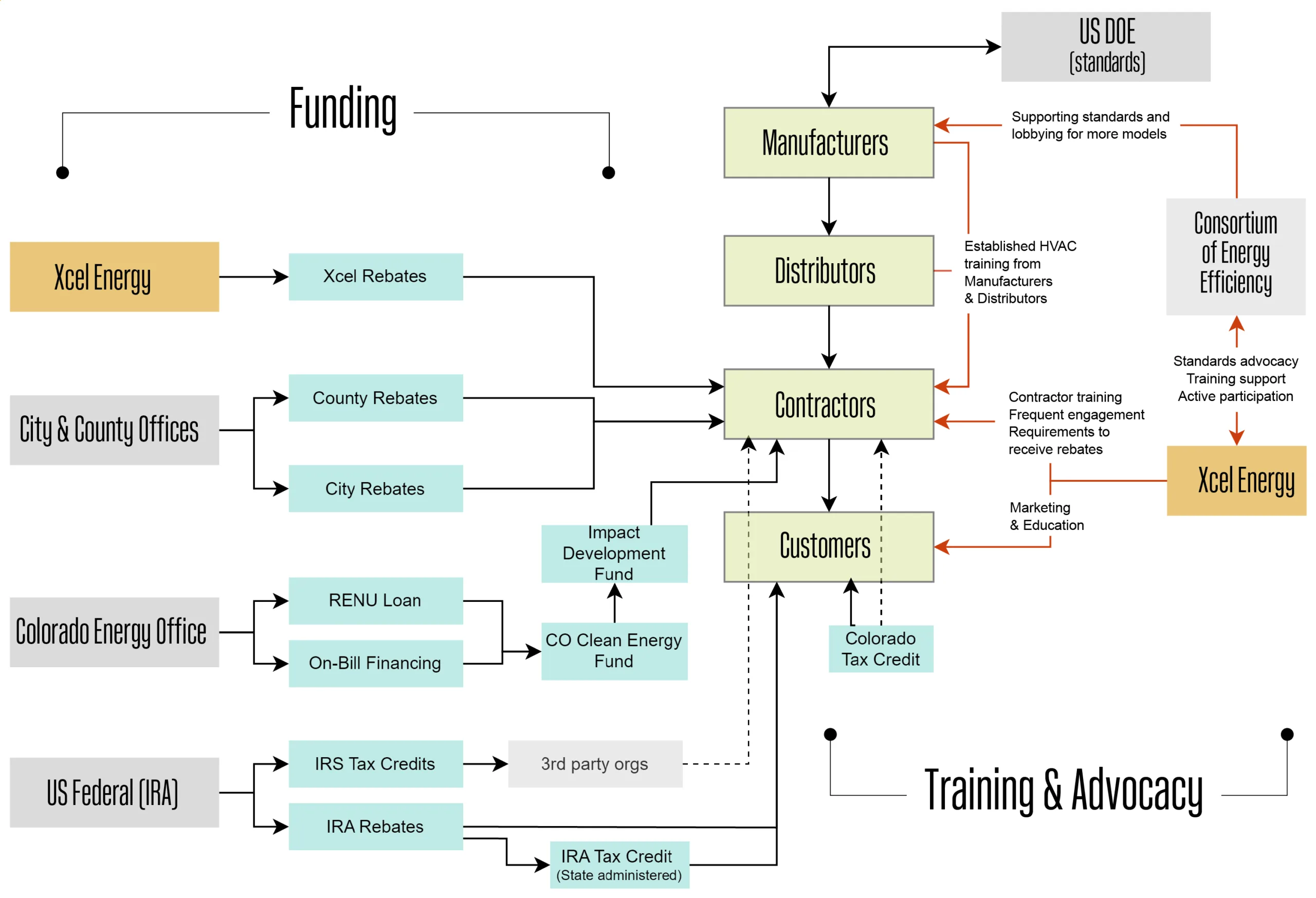
Where the PTLM focuses on programmatic elements, the market map outlines how market actors interact and how market interventions might influence their actions. The map will guide the evaluation of the direct and indirect influence that any intervention (Xcel’s or otherwise) creates in the market.
Spurring Market Momentum
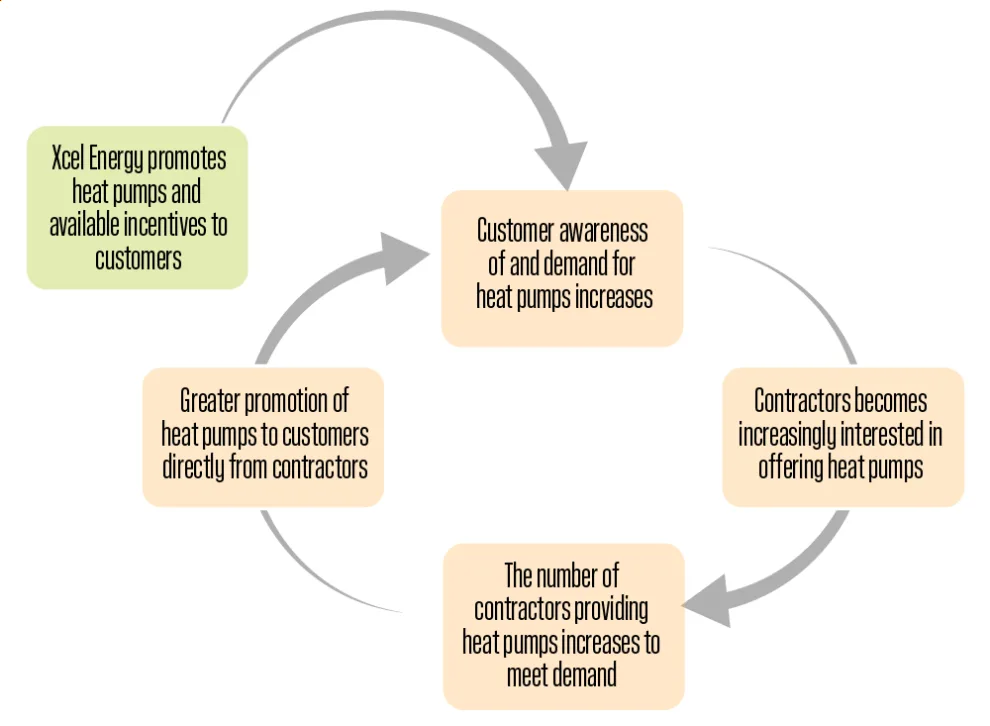
Market transformation takes hold when the system rides on its own. Xcel’s PTLM feedback loops tie awareness, demand, and availability into a self-sustaining cycle.
When these loops operate without program input, the market has been wrangled, and momentum can carry lasting influence and durability over time.
Trail Markers of Transformation
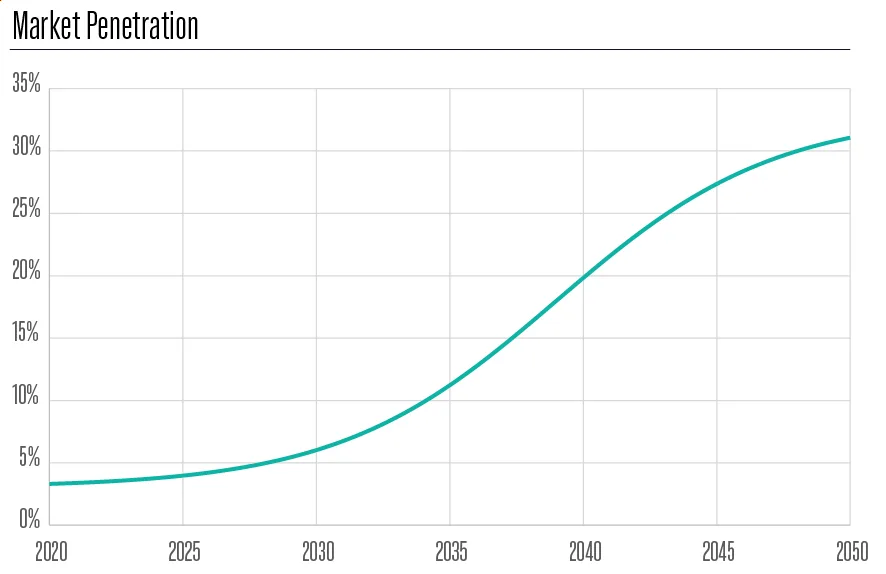
To measure change, you need a baseline. The BMA S-curve aims to set the baseline for pre-intervention, naturally-occurring adoption to quantify the cumulative effects over time.
Roundup and Ride On
- Don’t start with your program—start with the market. Understand the forces already in motion before you launch your intervention.
- Map the actors to understand influence. A Market Actor Map helps disentangle where specific program activities generate the greatest attributable effects.
- Use program theory as a field guide, not just a formality. A well-built PTLM is a living guide for strategy, adaptation, and evaluation.
- Look for loops, not just outcomes. Feedback loops are your signals that the market is sustaining itself.
- Model the baseline to measure the shift. A reference for the market’s natural path gives you a grounded way to estimate your impact.